How to Choose a Handsaw
The most important choice is cut action: western-style push saws drive the blade forward on the push stroke and are familiar to most DIYers, while Japanese pull saws (like the SUIZAN SR-001) cut on the pull stroke and produce thinner, cleaner kerfs. Once you settle that, match blade length to your workpiece and choose tooth count to balance speed against cut quality.
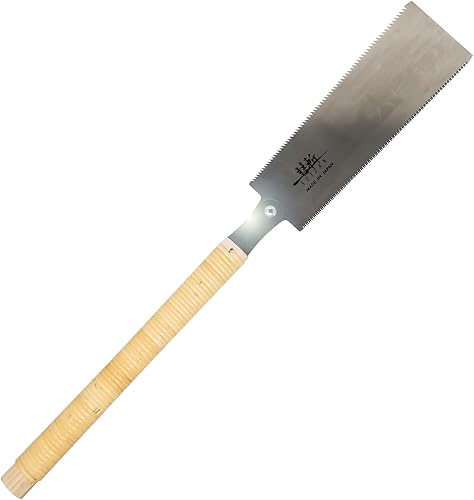


Push Cut vs. Pull Cut: The Fundamental Choice
Western handsaws cut on the push stroke, so the blade must be thick enough to resist buckling under compression. That thickness produces a wider kerf and slightly more effort per stroke, but it also means the saw is naturally stable when starting a cut without a guide slot. Japanese pull saws, such as the SUIZAN SR-001 ($42.33, 4.8 stars, 9,700 reviews) and the compact SUIZAN 150mm ($24.48, 4.8 stars, 6,000 reviews), cut on the pull stroke. Because the blade is under tension rather than compression during the cutting motion, Japanese saws can use thinner blades that flex during storage but hold their edge well in use. Owners report that Japanese pull saws start more easily in freehand cuts and leave surfaces that need less cleanup. The trade-off is that the pull-stroke motion feels unfamiliar to anyone trained on western saws, and replacement blades are specific to each model. Neither style is inherently superior. Pick push-cut for rough framing and outdoor work where speed and ruggedness matter most; pick pull-cut for joinery, trim, and any cut where surface quality reduces downstream sanding or planing.
Blade Length: Matching the Saw to Your Workpiece
Blade length in the sample products runs from 5 inches (Goldblatt G08501A, $12.79) to 14.7 inches (Silky 340-17, $57.99). A practical rule: each stroke should move the blade at least two-thirds of its length through the cut, so longer blades produce faster and more efficient cuts on dimensional lumber and timbers. Short 5 to 6 inch saws suit tight spaces, flush-cutting dowels and pegs, or trimming molding in place. The SUIZAN 150mm at 6 inches and roughly 0.07 kilograms is purpose-built for that confined-space work where a full-length saw would hit an obstruction before completing the stroke. For general carpentry involving 2x lumber or sheet goods, a blade in the 9 to 15 inch range is most efficient. The Silky 340-17 at 14.7 inches and 0.65 pounds strikes a balance between sweep length and control. Do not pick a saw based on maximum blade length alone. A 14-inch blade in a tight cabinet opening is worse than a 6-inch blade with full range of motion.
Steel Type and Blade Material: What the Spec Actually Tells You
The Silky 340-17 is listed as Hard Chrome Plated Steel. That chrome layer reduces friction during the cut and resists rust, which matters on tools stored in humid shops or used outdoors. The SUIZAN SR-001 and SUIZAN 150mm use Japanese Steel, a term that refers to high-carbon alloy steel heat-treated to hold an extremely fine edge. Japanese steel runs harder than typical carbon steel, which is why pull-saw teeth are impulse-hardened and not field-sharpenable. The Goldblatt G08501A blade is High Speed Steel, a material commonly used in hacksaw and scoring applications where hardness and wear resistance are priorities. The Klein 31737 ($26.98, 4.8 stars, 4,054 reviews) uses Carbon Steel, weighing 8.6 ounces with a 5.2-inch blade and a plastic handle. Carbon steel is traditional for western saws and can be resharpened with a saw file when the teeth are not impulse-hardened. When the listing does not specify tooth hardening, check whether the model is marketed as a replaceable-blade or reffilable design. A saw you can resharpen costs less over a decade of use. An impulse-hardened blade may stay sharp longer but must be replaced when teeth wear out.
Handle Material and Ergonomics: Reducing Fatigue on Long Cuts
Handle material affects vibration damping, grip security in wet or sweaty conditions, and overall weight distribution. The Silky 340-17 uses a rubber handle, which absorbs more shock than rigid plastics and gives a secure grip without gloves. At 0.65 pounds total, the saw remains light enough that handle comfort matters more than the weight class. SUIZAN products use wood handles, a traditional choice for Japanese saws. Wood provides a warm, non-slip grip and has some natural vibration damping, but it can crack or loosen if stored wet repeatedly. The Goldblatt G08501A lists its handle as Plastic or Rubber, signaling either a dual-material overmold grip or a product line variation. For occasional residential use, plastic handles are perfectly adequate. For repetitive cutting in framing, trim, or joinery work, a contoured rubber or wood grip reduces hand fatigue noticeably over a long session. Also check that the handle is set at a comfortable angle relative to the blade for your primary cut direction. Flush-cut saws typically have low-profile or offset handles so the back of the hand clears the work surface when the blade is flat against it.
Tooth Count and TPI: Balancing Speed Against Surface Quality
Teeth per inch (TPI) directly controls the trade-off between cutting speed and surface finish. Low TPI (5 to 8) removes material quickly but leaves a rough surface that needs planing or sanding. High TPI (14 to 20 or more, as on most Japanese pull saws) cuts slowly through thick stock but leaves a smoother surface that requires minimal cleanup. Western handsaws for general carpentry typically run 8 to 12 TPI. Japanese pull saws often run 15 to 20 TPI on the crosscut edge and lower on the rip edge when the blade is double-sided. The Silky 340-17 is a pruning and general-purpose design, where aggressive tooth geometry is valued for speed in green wood and irregular grain. The SUIZAN SR-001 at 9.5 inches is optimized for fine woodworking joints, where tooth geometry favors a clean kerf over raw speed. When TPI is not listed in the product specs, check the intended application in the product description. A ripping saw uses chisel-shaped teeth that shear fibers for cuts running with the grain. A crosscut saw uses knife-shaped teeth that sever fibers cleanly for cuts running across the grain. Using the wrong tooth type for your cut direction produces tearout and extra finishing work.
Price Tiers: Where to Spend for Your Use Case
The sample products span three clear price bands. At the entry level, the Goldblatt G08501A at $12.79 (4.8 stars, 8,236 reviews, 1,000 bought last month) shows that budget saws with High Speed Steel blades deliver enough performance for occasional use, and buyer demand confirms they are a realistic first choice for homeowners who cut infrequently. The mid range, from $24 to $43, includes the SUIZAN 150mm ($24.48) and the SUIZAN SR-001 ($42.33), both with Japanese Steel blades and wood handles, and both carrying large review volumes that reflect sustained buyer approval. These saws reward anyone who cuts frequently enough to notice the difference in effort and finish quality. The Silky 340-17 at $57.99 represents the premium tier, with Hard Chrome Plated Steel, a 14.7-inch blade, rubber handle, and the highest rating in the group at 4.9 stars across 2,066 reviews. Based on specs and verified owner reviews, the step from mid to premium pays for premium material and a longer cutting sweep rather than just a brand name. For a first handsaw, the mid range offers the best return. For professional trim work or joinery where cut quality is critical and the saw will see daily use, the premium tier is worth the difference in price.
Common mistakes to avoid
- Choosing blade length based on the longest cut you might ever make rather than the actual workspace, causing the heel of the saw to hit an obstruction on every stroke
- Using a rip-tooth saw for crosscuts, or a crosscut saw for ripping, which produces torn fibers and a rough surface that requires significant extra cleanup
- Assuming a modern impulse-hardened blade can be resharpened with a saw file, then discarding it prematurely when filing has no effect on the hardened teeth
- Ignoring handle angle relative to the blade, which causes wrist strain and loss of direction control on flush-cut or angled cuts
- Buying a Japanese pull saw without practicing the pull-stroke technique, then blaming the tool for poor early results that come from muscle-memory habits built on push saws
- Overlooking kerf width when fitting joints, where a western saw kerf of 0.050 inches or more is too wide for tight joinery that a thin Japanese pull-saw kerf would fit
Frequently asked questions
What TPI should a handsaw have for general woodworking?
For general crosscuts in dimensional lumber, 8 to 12 TPI is the practical range. Lower TPI cuts faster with a rougher surface; higher TPI cuts slower with a finer finish. Japanese pull saws like the SUIZAN SR-001 typically run 15 to 20 TPI and are suited to joinery and trim work where surface quality matters more than cutting speed.
Are Japanese pull saws better than western push saws?
Neither is universally better. Pull saws produce thinner kerfs and finer surfaces and start more easily in freehand cuts. Push saws are more familiar to most western-trained users and handle aggressive ripping better. The SUIZAN SR-001 has accumulated 9,700 reviews, which reflects strong buyer acceptance for pull saws in fine woodworking. Traditional western push designs remain common on job sites and in rough framing.
Can I resharpen a modern handsaw?
It depends on whether the teeth are impulse-hardened. Impulse-hardened teeth are harder than a standard saw file and cannot be resharpened by hand. Japanese steel blades like the SUIZAN SR-001 and SUIZAN 150mm fall in this category and require blade replacement when dull. Carbon steel blades without impulse hardening can be sharpened with a tapered saw file, though doing so requires practice to maintain consistent tooth geometry.
What blade length is best for trim and flush-cut work?
For flush-cutting plugs, dowels, or trim molding in place, a 5 to 6 inch blade gives enough stroke while clearing nearby walls and cabinet faces. The SUIZAN 150mm ($24.48) at 6 inches and 0.07 kilograms is purpose-built for that confined-space application. For open crosscuts on 2x lumber, a blade in the 9 to 15 inch range is more efficient.
Why does the Silky 340-17 cost nearly five times as much as the Goldblatt G08501A?
The Silky 340-17 ($57.99) uses Hard Chrome Plated Steel construction for reduced friction and corrosion resistance, a 14.7-inch blade for longer strokes, and a rubber handle for better grip control. Those material choices are reflected in its 4.9-star rating across 2,066 reviews. The Goldblatt G08501A ($12.79) is a High Speed Steel saw suited to occasional use. Buyers who cut regularly across varied materials tend to find the Silky's premium justified; occasional users often do not need to spend that much.