Hot Glue Gun Buying Guide
For most craft and home repair work, a full-size 11mm corded gun in the 40 to 60 watt range gives the best balance of heat-up speed, consistent temperature, and wide glue stick availability. If you work with heat-sensitive materials like foam or thin ribbon, prioritize a dual-temperature model with a confirmed low setting around 250 degrees Fahrenheit.

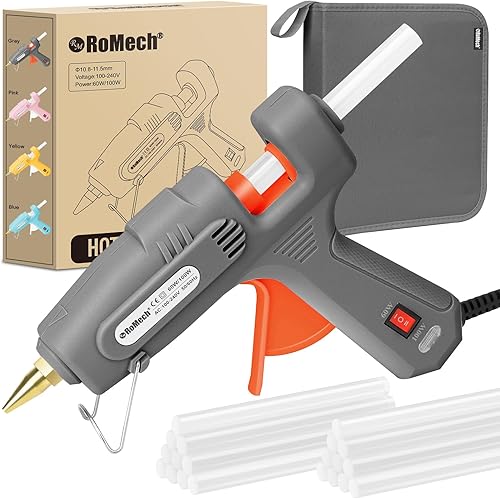

Full-Size vs Mini Hot Glue Guns
Hot glue guns split into two formats based on the glue stick they accept. Full-size guns take 11mm to 12mm diameter sticks, hold more glue per stick, and generally run at higher wattage for faster throughput. Mini guns take 7mm sticks and are lighter and easier to maneuver in small or detailed areas, making them a natural fit for floral arranging, small crafts, and delicate assembly. The Glue Guns and Adhesive Dispenser Accessories leaves in this section cover both formats plus compatible sticks and accessories. For general home repair, seasonal decorating, and moderate craft work, a full-size gun gives you more versatility and a wider range of stick formulas to choose from. Mini guns earn their place when precision in a tight space matters more than volume or bond strength, and their lower price makes them a useful second tool to own rather than a primary choice.
Wattage: Matching Power to Your Project
Wattage controls how quickly a gun heats up and how consistently it maintains temperature under load. Low-watt guns in the 10 to 20W range take 3 to 5 minutes to reach working temperature and lose heat when dispensing at high volume because the heating element cannot replace heat as fast as the glue carries it away. High-watt guns in the 40 to 100W range reach working temperature in 1 to 2 minutes and recover between pulls fast enough for continuous production work. For occasional craft projects and light home repair, 20 to 40W is sufficient. For sustained tasks like ribbon wrapping, upholstery, foam bonding, or gift assembly, a 60W or higher gun prevents the frustrating pause between trigger pulls while the gun catches up to temperature. Wattage is one of the most useful numbers in a glue gun listing. Do not overlook it in favor of price alone, because an underpowered gun on a demanding project produces weak bonds and wastes time.
Cord vs Cordless Operation
Corded guns draw power continuously from the outlet and maintain consistent heat across a session of any length. Cordless models run on a battery pack or butane cartridge, which removes the tether to an outlet and is convenient for outdoor crafts, job-site repairs, and school or event projects where a power source is not available nearby. The practical trade-off is session length and heat consistency. Battery or cartridge capacity limits how long a cordless gun can operate before needing a recharge or refill, and temperature stability may drop as the power source depletes toward the end of a charge. Based on verified owner reviews, cordless models suit intermittent and light-duty tasks well. For extended craft sessions, production assembly, or any project where sustained heat is critical to bond quality, a corded gun is the more reliable tool and is typically available at a lower price for the same wattage.
Temperature Settings: Single vs Dual Temp
Standard single-temperature guns operate near 380 degrees Fahrenheit, which works correctly with standard clear and colored glue sticks for most wood, cardboard, fabric, and hard-surface bonding. Dual-temperature guns add a low setting near 250 degrees Fahrenheit, which is required for low-temp glue sticks designed for heat-sensitive materials. Foam craft sheets, thin ribbon, latex balloons, and dried flowers will melt or scorch under standard-temperature glue before the adhesive has time to set, ruining both the material and the project. If any of those materials appear in your project list, a dual-temperature gun is a practical necessity rather than a luxury upgrade. For buyers who primarily bond wood, burlap, corrugated cardboard, and standard household surfaces, a single-temperature gun is simpler and typically less expensive. The dual-temp switch adds useful flexibility at a modest price premium and is worth considering even if you do not immediately need it.
Glue Stick Diameter and Compatibility
Stick diameter is not universal across glue gun models and buying the wrong size creates real problems. A 7mm mini stick placed in an 11mm full-size gun bypasses the barrel seal, allowing unmelted or partially melted glue to drip inside the housing and clog the nozzle over repeated uses. An 11mm stick will not feed at all in a 7mm mini gun. Always confirm your gun's rated stick diameter before purchasing sticks in bulk. Beyond diameter, stick formulas differ by application. Standard clear sticks suit most porous and semi-porous surfaces including wood, paper, and light fabric. Colored sticks add a decorative element for seasonal or display work. High-strength specialty sticks for wood, metal, and heavy fabric carry more adhesive polymer and produce stronger bonds on demanding substrates. Buying a bulk pack matched to both the gun's diameter and your primary material avoids wasted sticks and the weak bonds that come from using an incompatible formula.
Nozzle Design and Drip Control
Dripping glue between trigger pulls is one of the most common complaints about hot glue guns and it is primarily a design issue rather than a technique problem. Gravity and residual pressure push heated glue out of the nozzle orifice whenever the trigger is released and the gun sits idle. Better guns address this with a reverse valve mechanism that draws glue back slightly on trigger release, a narrower-orifice nozzle tip that resists passive flow, or a combination of both features. An integrated stand built into the gun body holds the nozzle elevated at an angle between uses, which reduces pooling at the tip. When neither design feature is present, a silicone mat or drip pad placed under the nozzle catches drips and makes cleanup straightforward. Never rest a heated gun directly on a wood or fabric work surface. Contact heat and adhesive drips will damage the surface and may bond the nozzle to the material, creating a more serious cleanup problem.
Price Range and Long-Term Costs
Hot glue guns and related fastening accessories in this section range from budget options under $20 to comprehensive professional tool sets at $149. For a first-time buyer doing occasional craft or repair work, a gun in the $20 to $40 range at 40W or higher offers adequate heat and build quality without overspending. Buyers who use a glue gun daily for production-level tasks in upholstery, woodworking trim, retail display construction, or professional crafts should target higher wattage at 60W or above, a metal-bodied or ceramic nozzle assembly that can be cleaned or replaced, and a manufacturer that stocks replacement parts. Glue sticks are an ongoing consumable cost that accumulates over time. Factor the price per stick and the packaging size of compatible sticks into the total cost of ownership before committing to a gun that accepts only proprietary or hard-to-source stick sizes. A gun that saves $10 upfront but requires expensive sticks often costs more over a season of regular use.
Common mistakes to avoid
- Using 7mm mini sticks in a full-size 11mm gun, which lets the undersized stick bypass the barrel seal and drip raw uncured glue inside the housing, clogging the nozzle over time
- Choosing a low-watt gun under 20W for fabric, foam, or heavy cardboard projects, then blaming bond failure on the glue when the gun cannot maintain enough heat to properly wet and penetrate the substrate
- Setting the gun down flat on a work surface between pulls without an integrated stand or silicone mat, allowing residual contact heat to damage the surface and pooling glue to harden onto the work area
- Pulling the trigger before the gun has completed a full heat cycle, producing thin stringy beads with poor initial tack that fail under light stress after the adhesive sets
- Applying standard 380-degree glue to foam, latex, or thin ribbon material, which melts and scorches the substrate before the adhesive sets and ruins both the material and the project
- Buying a gun based only on the unit price without checking the cost and local availability of compatible replacement sticks, which often becomes the larger expense over the life of the tool
Frequently asked questions
What size glue sticks do most hot glue guns use?
Full-size guns accept 11mm to 12mm diameter sticks. Mini guns accept 7mm sticks. The two diameters are not interchangeable, and using the wrong size causes feeding problems or nozzle clogs. Always check your gun's rated stick diameter on the product listing before buying sticks in bulk.
How long does a hot glue gun take to heat up?
Low-watt guns in the 10 to 20W range typically take 3 to 5 minutes to reach working temperature. High-watt guns at 60W or more are ready in 1 to 2 minutes. Always allow the gun to complete a full heat cycle before pulling the trigger. Starting too early produces stringy, weak beads that do not bond reliably and can clog the nozzle tip.
Can I use low-temp glue sticks in a standard hot glue gun?
No. Low-temp sticks are formulated to melt near 250 degrees Fahrenheit. Running them through a standard single-temperature gun set near 380 degrees Fahrenheit degrades the adhesive chemistry, causing the glue to flow too thin to form a strong bond. Use low-temp sticks only in a gun with a confirmed low-temperature setting, and verify that the gun's low setting actually reaches the lower temperature the sticks require.
How do I stop my hot glue gun from dripping between pulls?
Look for a gun with a reverse-valve mechanism that draws glue back on trigger release. Hold the gun at a slight upward angle when idle and always rest it on an integrated stand or silicone mat, never flat on the work surface. A silicone drip pad under the nozzle tip catches any residual drips without damaging the work area or bonding the nozzle to the surface.
What wattage do I need to bond wood or heavy fabric?
Light fabric and thin ribbon work at 20 to 40W. Dense substrates including wood, heavy burlap, corrugated cardboard, and foam board benefit from 60W or higher. Adequate wattage means the gun reheats between pulls fast enough to keep the glue fluid until parts are positioned, producing a more consistent bond than an underpowered gun that partially sets during the application window.
Is a cordless hot glue gun worth buying?
Cordless models work well for intermittent use, outdoor projects, and situations where no outlet is available. Based on verified owner reviews, they are best suited to light-duty and short-session tasks. For extended craft sessions or production-level bonding work, a corded gun maintains more consistent heat and eliminates the risk of running out of power mid-project. If portability is your main need, cordless is a reasonable choice at the right wattage.