Claw vs Ball-Peen Hammer: Key Differences and When to Use Each
A claw hammer is designed for driving and pulling nails in wood, making it the right choice for carpentry, framing, and general home repair. A ball-peen hammer is a machinist's tool with a hardened striking face and a rounded peen end built for metalwork, riveting, and striking punches and chisels on metal.


The Core Design Difference
The two hammers solve fundamentally different problems, and that starts with the head geometry. A claw hammer has a flat striking face on one side and a forked claw on the other. That claw exists for one purpose: pulling nails out of wood without tearing up the surface around them. The face is typically milled (waffle-textured) or smooth depending on the application. A ball-peen hammer, by contrast, has a flat face on one end and a hardened, dome-shaped peen on the other. The peen is used to spread and round metal, seat rivets, and mushroom the end of pins so they cannot back out. Neither end of a ball-peen hammer is designed to pull nails, and the claw of a standard nail hammer is not hardened for repeated impact against metal. Using the wrong tool for the job risks damaging both the workpiece and the hammer head itself.
Where the Claw Hammer Excels
For any work involving nails in wood, a claw hammer is the tool you reach for first. Framing carpenters, finish carpenters, roofers, and general DIYers all rely on it as an everyday tool. The flat face drives nails flush without denting the wood surface badly, while the claw gives you a mechanical advantage to extract bent or proud nails cleanly. Head weight matters here: a 16-ounce head is the standard for general carpentry, letting you drive a 16d framing nail in three to four swings without exhausting your arm over a full day. The ESTWING E3-16C, for example, is a 16-ounce alloy steel one-piece hammer rated 4.9 stars across 1,700 verified owner reviews at $34.43, and owners consistently point to its balance for sustained nail-driving. At 14.4 ounces, the ESTWING E3-WC hits the sweet spot for trim and finish work where you want less mass and more control, with 4,459 reviews and a 4.9-star rating at $30.27. For heavier demolition or framing, a straight-claw (rip) variant like the ESTWING E3-16S offers the same durable alloy steel construction at a 16-ounce head weight and $24.98, with 4,854 reviews at 4.8 stars.
Where the Ball-Peen Hammer Excels
Ball-peen hammers are the standard in metalworking shops, auto repair bays, and machinist work. The hardened face is engineered to strike hardened objects, including cold chisels, center punches, and drift pins, without chipping or deforming the face the way a softer claw hammer face would. The ball peen itself is used to peen the shank of a rivet after insertion, spreading the metal evenly so the joint does not loosen. It is also used in blacksmithing-adjacent tasks to shape hot or cold metal on an anvil. Head weights for ball-peen hammers commonly range from 8 ounces for detail work up to 48 ounces for heavy machinist tasks. When you see a hammer listed at 624 grams with a carbon steel head (roughly 22 ounces), such as the Spec SPEC-M22CF at $24.97 with a 4.8-star rating across 4,496 reviews, that weight class is typical of a general-purpose metalworking ball-peen. The hardened alloy steel handle on that model also distinguishes it from wood-handled claw hammers that prioritize vibration dampening over rigidity.
Head Weight and How to Choose It
Weight governs how much force you transfer per swing and how quickly fatigue sets in. For a claw hammer, 16 ounces works for most carpentry tasks; go up to 20 to 28 ounces if you frame full days or drive large spikes. A lighter 12 to 14-ounce head, like the ESTWING E3-WC at 14.4 ounces, reduces arm fatigue during finish work where you drive smaller brads and casing nails. With ball-peen hammers, choose head weight based on the size of the metal you are striking: an 8-ounce peen is right for jeweler-scale rivet work and light chisel driving, 12 to 16 ounces covers most automotive and general machinist tasks, and 24 ounces or more is reserved for heavy peening and large drift pins. Matching the hammer weight to the task is not optional. Swinging too heavy a hammer for fine metalwork causes you to overshoot your mark; too light for heavy framing means more swings, more fatigue, and greater risk of off-center hits that bend nails.
Handle Materials: What the Specs Actually Mean
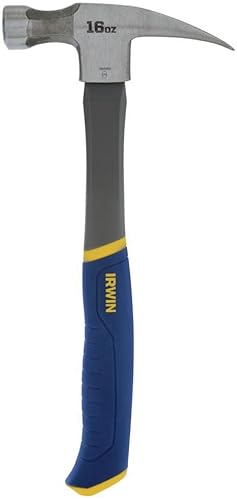
Handle material affects vibration transfer, durability, and overall feel after a long session. One-piece alloy steel handles, as found on the ESTWING E3-WC, E3-16C, and E3-16S, eliminate the risk of a loose head but transfer more vibration into the palm, which some owners manage with a grip wrap or gloves. The IRWIN 1954889 takes a different approach: an alloy steel head paired with a fiberglass handle rated 4.8 stars across 7,200 reviews and bought by over 3,000 owners last month at $11.99. Fiberglass absorbs more vibration than steel, which is why fiberglass-handled claw hammers appeal to users with wrist fatigue concerns. Wood handles are traditional and still common on ball-peen hammers because wood provides a natural vibration break and is easy to replace if it splits. Rubber and plastic handles appear on budget hammers and work acceptably for light tasks but tend to degrade faster under heavy daily use. The Edward ET-RMH16, listed at $13.95 with a brass head and rubber handle, is a 16-ounce option with 4,800 reviews and 4.8 stars that 3,000 buyers purchased last month, illustrating that brass and rubber combinations are popular for non-marring applications where a steel face would damage a soft workpiece.
Can One Hammer Cover Both Jobs?
The honest answer is: not well. A claw hammer used on a cold chisel or center punch risks cracking or chipping the face because the face steel is not hardened to the same level as a ball-peen. Conversely, a ball-peen hammer has no nail-pulling capability at all. Most tradespeople and serious DIYers own both. If you can only start with one, choose based on what you actually do most often: nail-heavy work in wood means buy a quality claw hammer first; regular metalwork, auto bodywork, or any riveting means start with a ball-peen. A practical budget-entry option for those wanting a claw hammer without committing much money is the IRWIN 1954889 at $11.99, or the Mr HM06NL, a carbon steel hammer weighing 227 grams with a plastic handle, rated 4.8 stars across 9,665 reviews and purchased by over 4,000 owners last month at $5.94. Neither replaces a dedicated metalworking ball-peen, but both deliver solid nail-driving performance for general home repair without a large upfront cost.
Quick Buying Checklist Before You Choose
Run through these points before adding a hammer to your cart. First, identify the primary material you will strike: wood (nails, pegs, dowels) points to a claw hammer; metal (chisels, punches, rivets, drifts) points to a ball-peen. Second, pick head weight for your most common task rather than for the heaviest possible task you might eventually do. Third, check the handle material against your tolerance for vibration, especially if you plan to use the hammer for more than an hour at a stretch. Fourth, confirm the head material: alloy steel and carbon steel are the standard for both hammer types; avoid vague listings where head material is entirely absent, since you cannot verify hardness. Fifth, treat review count and monthly purchase volume as a proxy for real-world durability. A hammer earning 4.8 stars or above across several thousand verified owner reviews has had its weak points stress-tested at scale. The data here covers hammers from $5.94 to $34.43, and price alone is not a reliable predictor of whether a specific model will hold up to your actual workload.
Common mistakes to avoid
- Using a claw hammer face to strike a cold chisel or metal punch. The face is not hardened for this and can chip, sending metal fragments toward your face.
- Buying a 16-ounce hammer as a universal rule without considering the actual nail size. Trim work with a 16-ounce head is unwieldy; framing with a 12-ounce head is exhausting.
- Assuming a one-piece steel handle is always better. One-piece alloy steel is extremely durable but transfers more vibration than fiberglass, which matters on long work sessions.
- Using a ball-peen to pull nails. Ball-peen hammers have no claw. Forcing the peen under a nail head to pry it out damages the peen and the workpiece.
- Ignoring head weight listed in the specs. A hammer listed at 227 grams (~8 ounces) is a light finish or tack weight, not a framing weight, regardless of how the listing is worded.
- Buying the cheapest option without checking review count. A 4.8-star rating across 9,665 reviews signals consistent field performance; the same rating across 12 reviews does not.
Frequently asked questions
Can I use a claw hammer for metalwork?
For light tasks like tapping a drift pin or seating a chisel in wood, yes. But for striking hardened metal tools like center punches or cold chisels repeatedly, no. The face of a standard claw hammer is not hardened to the same degree as a ball-peen face and risks cracking or chipping under repeated metal-on-metal impact.
What is the ball end of a ball-peen hammer actually used for?
The ball peen is used to peen rivets after they are inserted, spreading the shank into a rounded head that locks the joint. It is also used in metalforming to stretch and shape sheet metal or hot metal on an anvil. It is not used for driving nails and provides no benefit in standard carpentry.
Is 16 ounces the right weight for most people?
For general carpentry and framing nail work, 16 ounces is the most common choice and a reasonable starting point. If your work is primarily finish carpentry or trim, a 12 to 14-ounce head gives more control. If you regularly drive large spikes or do heavy framing all day, 20 to 28 ounces may save you swings. The ESTWING E3-16C at 16 ounces and 4.9 stars across 1,700 reviews is a benchmark for general use.
Does a one-piece steel handle really last longer than wood or fiberglass?
Based on verified owner reviews, one-piece alloy steel handles like those on the ESTWING lineup eliminate the most common failure point, which is a loose or cracked handle where it meets the head. However, they transfer more shock into the hand. Fiberglass handles, as seen on the IRWIN 1954889 with 7,200 reviews at 4.8 stars, absorb more vibration and are also very durable. Wood handles are replaceable if they crack but require periodic tightening or wedge checks.
How heavy is a typical ball-peen hammer compared to a claw hammer?
Both types overlap significantly in head weight, typically from 8 ounces to 32 ounces for everyday use. The difference is not weight but head geometry and face hardness. A 16-ounce ball-peen and a 16-ounce claw hammer weigh the same but are designed for entirely different applications.
Which hammer should a first-time DIYer buy?
Start with a 16-ounce claw hammer if your projects involve any assembly, framing, or repair work with nails in wood. The IRWIN 1954889 at $11.99 with a fiberglass handle and alloy steel head covers most home repair tasks at low cost. If you plan to do auto bodywork, riveting, or machinist tasks, add a ball-peen hammer as a second tool. Have additional questions? Reach us at [email protected].