How to Choose Wood Chisels
Choose a wood chisel by matching blade width to your joint sizes, verifying the blade is alloy or high-carbon steel, and picking a handle material that suits your striking method. A four-piece set covering 6 mm to 26 mm handles the widths used in most furniture and carpentry work.

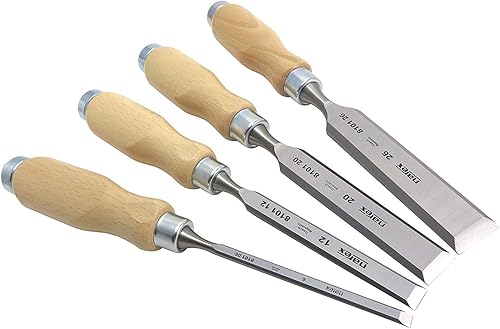

Bench, Mortise, and Paring Chisels: Start with the Right Type
The bench chisel is the workhorse found in most woodworking kits. Its blade thickness sits between a mortise chisel and a paring chisel, which makes it versatile for chopping dovetail waste, cleaning hinge mortises, and general paring. Mortise chisels are noticeably thicker along the spine so they can lever compacted wood out of a deep mortise cut without flexing or twisting. If you do timber framing or traditional mortise-and-tenon joinery where you drive the chisel hard with a mallet, a dedicated mortise chisel pays off. Paring chisels are thinner and longer, designed to be pushed entirely by hand to shave thin amounts from a joint surface for precise fitting. For most DIYers and furniture makers just starting out, a set of bench chisels covers every everyday task, and you can add a mortise or paring chisel later once you understand what your work actually demands. The Narex 863010, which ships in four widths (6 mm, 12 mm, 20 mm, and 26 mm) with an alloy-steel blade and a wood handle at $49.50, is a representative bench-chisel set that addresses this range.
Steel Type and Edge Retention
The steel in the blade determines how long the edge holds between sharpenings and how easy the chisel is to re-sharpen. Production chisels in the $17 to $50 range most commonly use alloy steel, which hardens sufficiently to hold an edge through normal shop use and re-sharpens without specialist equipment. The Narex 863010 uses alloy steel, as does the IRWIN 1768781, which is rated 4.8 stars from 671 verified reviews at $25.99. Chrome-vanadium steel, found on some mid-range sets, adds corrosion resistance and a measure of toughness. Premium O1 or A2 high-carbon steel holds a sharper edge longer but requires more technique to sharpen correctly and commands a higher price. For a beginner or occasional woodworker, alloy steel in the mid-price range is the pragmatic choice: it sharpens on an ordinary waterstone or oil stone, and the edge is adequate for dovetails, mortises, and hinge work. Chase higher steel grades only after your sharpening technique is consistent enough to actually benefit from them.
Handle Material and Mallet Compatibility
A chisel handle must survive repeated mallet blows and stay comfortable during long paring sessions. Wood handles, like the beech wood on the Narex 863010, feel natural and pair well with wooden carpenters' mallets. They can be replaced if they split, and owners often appreciate the traditional feel for hand work. Acetate and composite handles, such as the Acetate or ProTouch Grip on the IRWIN 1768781 (which weighs 16 ounces with its alloy-steel blade), resist splitting under steel-headed mallets and typically include a bolster at the blade shoulder to spread impact evenly. Polypropylene and rubber-grip handles add comfort during extended use and tolerate occasional mallet strikes but are better suited to work where most force comes from hand pressure rather than heavy chopping. The general rule: if you use a steel hammer or heavy mallet, choose an acetate, polypropylene, or steel-capped handle. If you prefer a wooden mallet and traditional joinery methods, a wood-handled chisel feels more responsive and resonates better through the cut.
Blade Width: Which Sizes Do You Actually Need
Width selection is one of the most practical questions in buying chisels, and the answer is simpler than it sounds. A 1/4-inch (approximately 6 mm) blade fits between dovetail pins and reaches into tight corners. A 1/2-inch (12 mm) blade cleans mortise walls and fits most standard-width mortises for furniture tenons. A 3/4-inch (19 to 20 mm) blade handles door-hinge recesses on standard interior doors. A 1-inch (25 to 26 mm) blade pares wide glue joints and face grain. Buying all four widths at once in a set covers the situations you will encounter across 90 percent of woodworking projects. If you must buy a single chisel first, a 3/4-inch or 1-inch bench chisel handles the widest variety of tasks. The Narex 863010 covers exactly these four widths (6 mm, 12 mm, 20 mm, 26 mm) in a single purchase, which is why it draws consistent buyers from both hobbyists and semi-pro woodworkers. Beyond these four, specialty widths (3/8-inch, narrow mortise widths, or very wide 1.5-inch paring chisels) are worth adding only when a specific job demands them.
Sets vs. Individual Chisels: Which Makes More Sense
A beginner buying a four-piece set gets every commonly used width in one purchase and avoids the regret of choosing a single chisel that does not fit the next job. Sets in the $20 to $50 range from recognized brands deliver consistent steel hardness and handle fit across all pieces, which matters more than it sounds: a set where one blade is softer than another creates inconsistent sharpening sessions. The Dewalt DWHT16862 at $19.90, rated 4.8 stars across 1,000 reviews and bought by 1,000 owners last month, represents the high-demand single-chisel end of the market for someone who needs a solid tool before a specific project. Individual purchases make sense as you build out your collection: once you know which width you reach for constantly, buying a higher-quality individual chisel in that size is a good upgrade path. Avoid the temptation to buy a very large set (eight pieces or more) early on. The extra widths often sit unused, and the budget spent on them would improve the quality of the four widths you actually use.
Common mistakes to avoid
- Skipping the initial sharpening: most chisels ship ground but not honed, and using them straight from the package produces torn grain and rough cuts.
- Buying a single chisel before knowing which width your work actually needs: starting with a mid-range four-piece set reveals your usage patterns before you invest in individual specialty widths.
- Using a steel hammer on a wood-handled chisel not rated for it: wood handles can split under a metal hammer head; choose a mallet-compatible handle or a reinforced composite handle for heavy chopping.
- Ignoring the back of the blade: flattening the flat face of the chisel is as important as sharpening the bevel, and skipping it means the cutting edge can never reach its potential.
- Buying an oversized set early on: eight-piece and twelve-piece sets sound comprehensive but most woodworkers use three or four widths consistently, and the extra pieces dilute budget from better quality in the sizes that matter.
- Storing chisels loose in a toolbox: bare blades rubbing against metal tools create nicks in the edge; a roll pouch or individual blade guards protect the edge between uses.
Frequently asked questions
What is the best starter set of wood chisel sizes?
A four-piece set covering 1/4 inch (6 mm), 1/2 inch (12 mm), 3/4 inch (20 mm), and 1 inch (26 mm) handles the joints, hinge mortises, and paring tasks that come up in most woodworking. The Narex 863010 ships these exact four widths at $49.50 with an alloy-steel blade and wood handle.
Can I use a metal hammer with a wood chisel?
It depends on the handle. Chisels with reinforced polypropylene, acetate, or steel-capped handles are rated for steel-hammer strikes. Traditional wood handles, like those on the Narex 863010, are designed for use with wooden or rubber mallets. Striking a plain wood handle with a metal head can split the handle over time.
Do I need to sharpen a new chisel before using it?
Yes. Production chisels arrive with a ground bevel but are not honed to a working edge. Flatten the back on a medium-grit stone, then work the bevel through progressively finer grits until the edge is polished and shaves cleanly. Owners of alloy-steel chisels consistently report a significant performance improvement after even a brief sharpening session.
What is the difference between a bench chisel and a mortise chisel?
A bench chisel has a medium blade thickness suitable for paring, chopping dovetails, and cleaning joints. A mortise chisel is thicker and stiffer along the spine so it can lever compacted wood out of a deep mortise without twisting. For general woodworking, start with bench chisels and add a mortise chisel only if your work involves regular heavy mortising.
Is alloy steel good enough for fine woodworking?
Based on specs and verified owner reviews, alloy-steel chisels in the $25 to $50 range handle furniture making, door fitting, and cabinet joinery well. The edge holds through normal use and re-sharpens on a standard waterstone. High-carbon O1 or A2 steel holds a keener edge for longer, but the difference is most noticeable to woodworkers with a refined sharpening technique.
How do I store chisels to protect the edges?
Keep chisels in a canvas roll pouch, a wooden chisel rack, or with individual plastic blade guards. Storing bare blades loose in a metal toolbox allows them to contact other tools and chips the edge. Even a simple cardboard slot protector on each blade extends the time between sharpenings noticeably.